
-
Fischer Manual Construction Foam Pot 700 ml
Vendor:FISCHERRegular price 46,00 krRegular priceUnit price per137,00 krSale price 46,00 krSale -
Illbruck 2 in 1 Polyurethane Foam Bottle 750ml FM310
Vendor:ILLBRUCKRegular price 83,00 krRegular priceUnit price per231,00 krSale price 83,00 krSale -
Sika Primer 3N Primer Pot
Vendor:SIKARegular price From 401,00 krRegular priceUnit price per486,00 krSale price From 401,00 krSale -
Construction Foam Spray Gun 700 ml Fischer
Vendor:FISCHERRegular price 55,00 krRegular priceUnit price per137,00 krSale price 55,00 krSale -
Multi-purpose polyurethane foam spray gun 750ml Multi-Purp Soudal
Vendor:SOUDALRegular price 64,00 krRegular priceUnit price per125,00 krSale price 64,00 krSale -
Manual multi-purpose polyurethane foam canister 750ml Multi-Purp Soudal
Vendor:SOUDALRegular price 64,00 krRegular priceUnit price per125,00 krSale price 64,00 krSale -
Illbruck PU Foam PRO FM300 750ml Can
Vendor:ILLBRUCKRegular price 49,00 krRegular priceUnit price per230,00 krSale price 49,00 krSale -
Compact Force Manual Multipurpose Foam Pot 700 ml Fischer
Vendor:FISCHERRegular price 65,00 krRegular priceUnit price per137,00 krSale price 65,00 krSale -
Illbruck AA290 Multipurpose Cleaning Spray
Vendor:ILLBRUCKRegular price 133,00 krRegular priceUnit price per173,00 krSale price 133,00 krSale -
Total Thermal Shield Fischer White Insulation Membrane
Vendor:FISCHERRegular price From 4 451,00 krRegular priceUnit price per4 711,00 krSale price From 4 451,00 krSale -
Illbruck AA232 Foam Gun
Vendor:ILLBRUCKRegular price 231,00 krRegular priceUnit price per312,00 krSale price 231,00 krSale -
Polyurethane foam for tiles gun 750ml Fischer
Vendor:FISCHERRegular price 137,00 krRegular priceUnit price per137,00 krSale price 137,00 kr -
Fischer manual polyurethane foam for tiles 750ml
Vendor:FISCHERRegular price 137,00 krRegular priceUnit price per137,00 krSale price 137,00 kr -
PRO FM330 Elastic Polyurethane Foam Bottle 880ml Illbruck
Vendor:ILLBRUCKRegular price 133,00 krRegular priceUnit price per168,00 krSale price 133,00 krSale -
Wood Wool Wood Chip Plate 60x60
Vendor:KNAUFRegular price 95,00 krRegular priceUnit price per103,00 krSale price 95,00 krSale -
Fischer FIS DM S Pro cartridge manual injection gun
Vendor:FISCHERRegular price 828,00 krRegular priceUnit price per828,00 krSale price 828,00 kr -
Soudafoam 2K two-component PU foam 400ml Soudal
Vendor:SOUDALRegular price 169,00 krRegular priceUnit price per169,00 krSale price 169,00 krSold out -
Fischer Total Projectable Foam Insulation
Vendor:FISCHERRegular price 178,00 krRegular priceUnit price per178,00 krSale price 178,00 kr -
Fire Resistant Foam Pot 750ml Fischer Fire Stop Manual
Vendor:FISCHERRegular price 187,00 krRegular priceUnit price per262,00 krSale price 187,00 krSale -
Fire-resistant polyurethane foam Soudafoam FR HY 750ml Soudal
Vendor:SOUDALRegular price 194,00 krRegular priceUnit price per194,00 krSale price 194,00 kr -
Genius 700ml Soudal Projectable Foam
Vendor:SOUDALRegular price 215,00 krRegular priceUnit price per215,00 krSale price 215,00 kr -
Sika Boom-180 750ml self-expanding polyurethane foam
Vendor:SIKARegular price 87,00 krRegular priceUnit price per87,00 krSale price 87,00 kr -
Illbruck Panel Adhesive Foam Pot 750ml PU010
Vendor:ILLBRUCKRegular price 287,00 krRegular priceUnit price per433,00 krSale price 287,00 krSale -
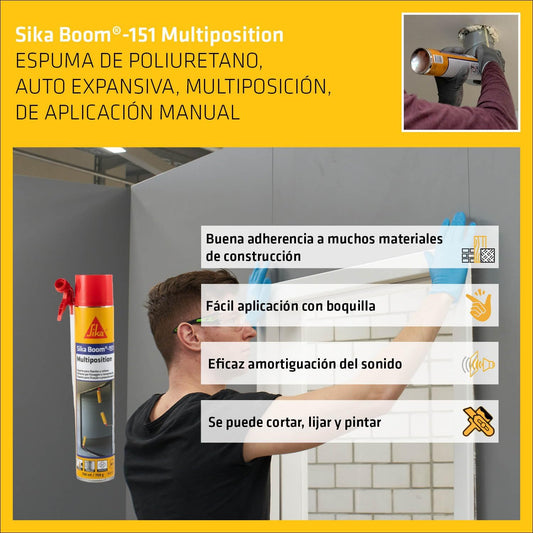
Polyurethane foam 750ml Sika Boom-151 Multiposition
Vendor:SIKARegular price 136,00 krRegular priceUnit price per149,00 krSale price 136,00 krSold out


What is thermal insulation and acoustic insulation?
At Brikum, we understand the importance of a comfortable and efficient home. Thermal and acoustic insulation are materials designed to improve quality of life by reducing heat loss and blocking outside noise, creating an ideal environment inside each room. These products not only help maintain a constant temperature but also reduce noise, making them perfect for homes, offices, and commercial spaces.
Benefits of using thermal insulation and acoustic insulation
1. Energy savings and consumption reduction
With good thermal insulation, you can minimize heat loss in winter and prevent heat gain in summer, reducing the need for heating and cooling systems. This translates into lower energy bills and a more efficient and environmentally friendly home.
2. Noise reduction and improved privacy
Acoustic insulation is ideal for those seeking a quiet environment free from annoying noises, especially in urban areas. This type of material helps block out external sounds and improves privacy between rooms, providing a more pleasant space suited to rest or work.
3. Versatility of materials and applications
There are various types of insulation, from mineral wool panels to acoustic foams, that adapt to different types of buildings and needs. At Brikum, we offer a wide range of solutions so you can choose the best thermal and acoustic insulation for your project.
Find the perfect thermal and acoustic insulation at Brikum
At Brikum, we combine experience and quality to help you create comfortable, efficient, and private spaces. Consult our team of experts to find the ideal option for you and ensure the peace of mind and efficiency of your home.
What is polyurethane foam?
Polyurethane foam is an insulating and sealing material widely used in construction and DIY due to its versatility and ease of application. By expanding upon contact with air, this foam fills gaps, seals joints, and provides excellent thermal and acoustic insulation. At Brikum, we know that polyurethane foam is ideal for those looking for a material that combines efficiency and practicality in sealing and insulation projects.
Polyurethane foam is known for its insulating properties, both reducing heat loss and blocking out external noise. This makes it an excellent choice for windows, doors, walls, and any other area where you want to improve the thermal and acoustic comfort of your home.
One of the greatest benefits of polyurethane foam is its flexibility. It can be applied to various surfaces such as wood, metal, cement, and brick, adapting to construction, repair, and home improvement projects. It is especially useful for sealing window and door frames, as well as for filling cracks and spaces in walls or ceilings.
Polyurethane foam is resistant to moisture and temperature changes, ensuring a long-lasting and effective seal. Furthermore, once dry, it can be painted or coated, making it easy to integrate into any project without compromising aesthetics.
Find the perfect polyurethane foam at Brikum
At Brikum, we offer different types of polyurethane foam so you can find the option that best suits your needs. Our team of specialists is available to advise you and help you choose the right product for each project, whether for insulation, sealing, or home improvements.